PoleFX Docs

Permanent Pole

Permanent LED Dance Pole Animation Overlay

Rigidly mounted between a bearing in the ceiling and a bearing in the floor, custom built to the height of your room. Every section of this page is listed under On this page.

Fixing the two mounts is a job for a qualified installer. See Pole Setup.

Specs

Feature Description
Configuration Single Piece
Height Up to 143 in ceiling to floor, of which up to 120 in is lit. Ask us about a longer build
Diameter 46mm
Power 5VDC, 60W
Data connection Ethernet
Mounting Top and bottom bearings

What the parts are called

The pole is one tube held between two bearings. Everything you connect is at the top.

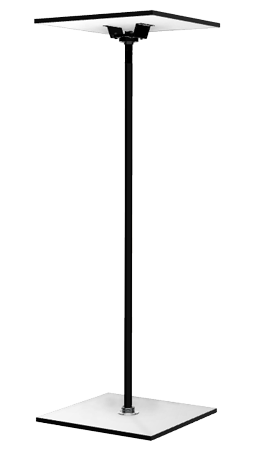
PERM-02Permanent pole, top to bottom
A permanent pole standing between an upper mounting surface and a lower one. A bracket and bearing hang below the upper surface, the tube runs the full height, and a second bearing sits in the lower plate. 1 2 3 4 5
  1. Mounting surface The ceiling, a beam, or whatever the top mount is fixed to. The pole does not touch it. It hangs about an inch below.
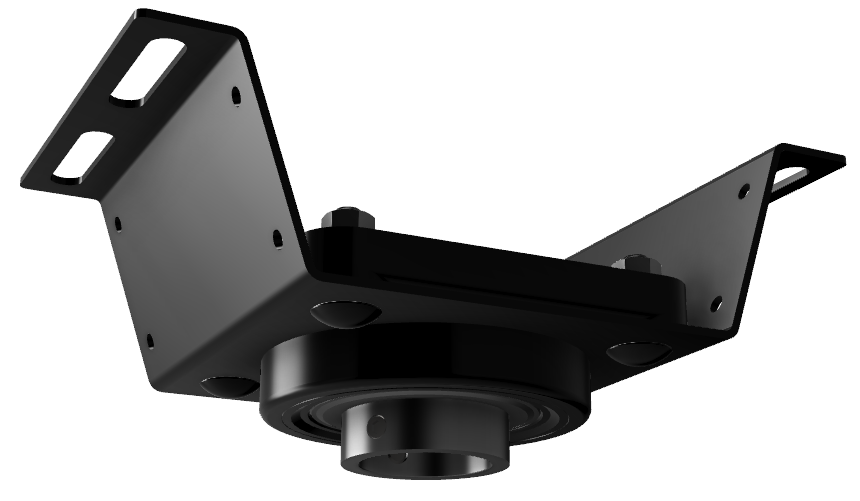
  2. Top mount and bearing A bracket with slotted flanges carries the upper bearing. The pole turns in it, and a collar clamped under it keeps the pole from lifting out.
  3. Unlit top section Plain tube between the bearing and the first LED. It is 7 inches on a standard build, and longer in a tall room. See Sizing.
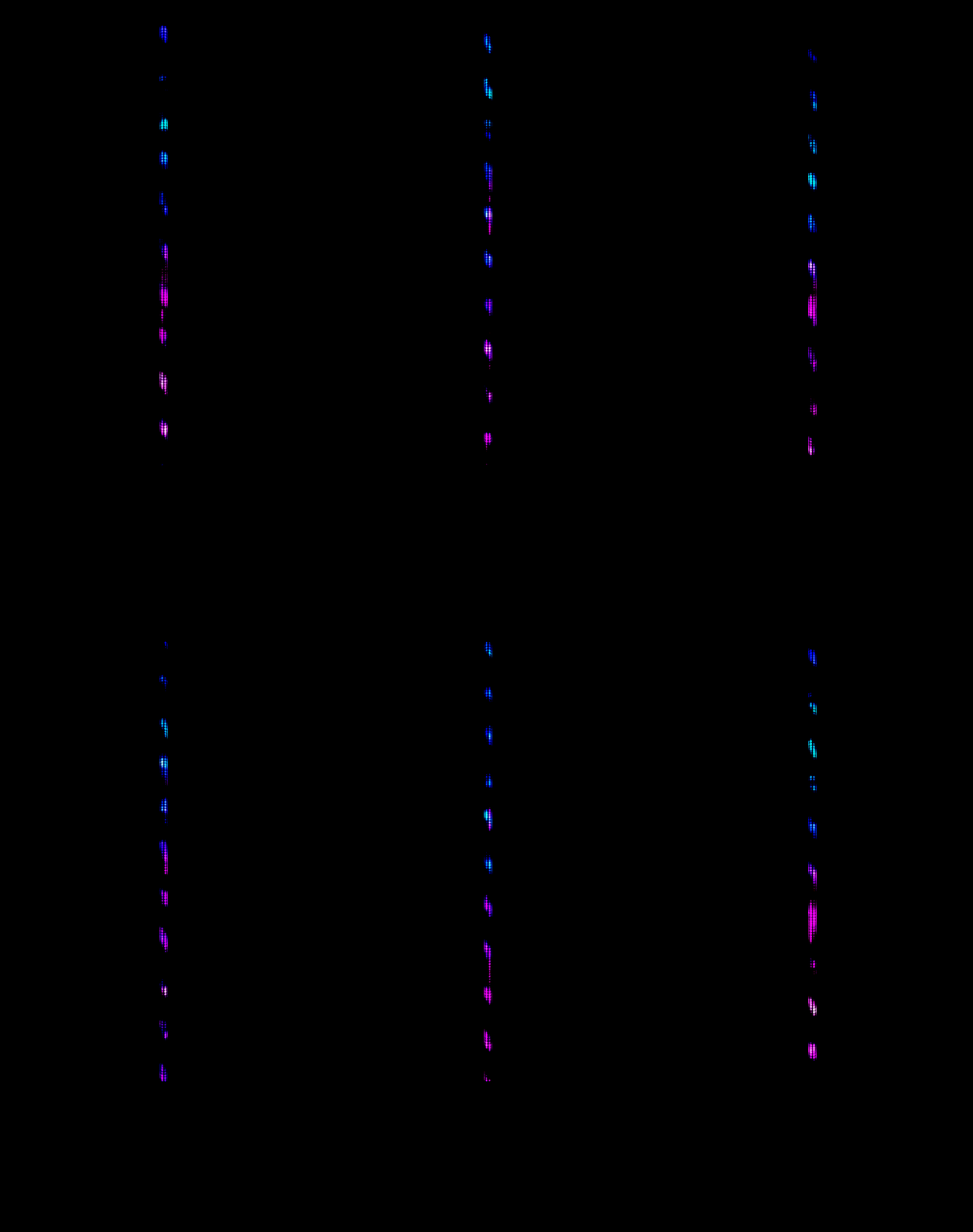
  4. LED display The lit length, built to fit your room, up to 10 feet. The render above shows the pole switched off.
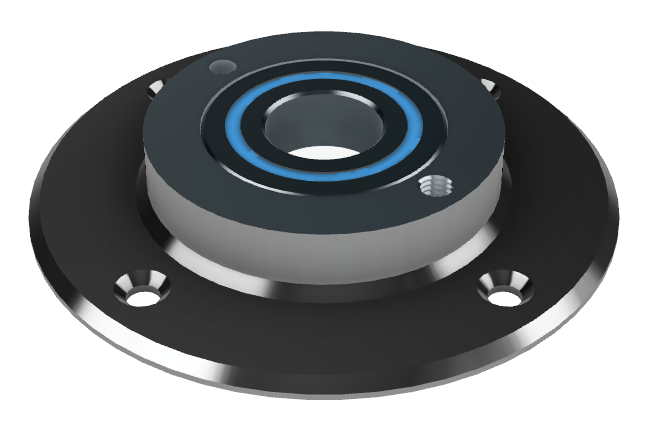
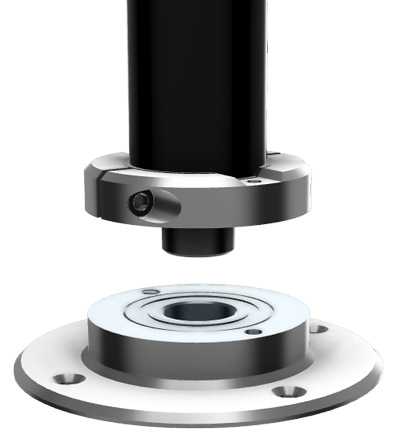
  5. Bottom bearing A flanged bearing in the floor mount. A short stub on the end of the pole drops into it, so the pole is located rather than bolted down.
Power and Ethernet both arrive at the top of the pole, not the bottom. See Step 5. Source: assets/devices/permanent/support_450.png, product render.

Sizing

Each permanent pole is custom built to fit the size of the space it is being installed in.

PERM-03How a permanent pole is sized
Dimension drawing of a permanent pole between ceiling and floor. Seven inches of unlit tube at the top, a 120 inch LED display below it, and 129 inches overall from ceiling to floor. 1 2 3 4 5
  1. Top gap, about 1 inch The pole stops short of the surface it is mounted to. That gap is what lets you take the pole out later without removing the mounts.
  2. Unlit top tube, 7 inches The section that interfaces with the upper bearing. That is the standard length, and it covers any room up to a 129 inch ceiling. Past 129 inches the top tube is lengthened instead, to as much as 21 inches.
  3. LED display, custom, up to 120 inches The lit length is cut to your room. 120 inches, or 10 feet, is the longest display that can be built.
  4. Ceiling to floor, 129 inches here The overall dimension covers the top gap, the unlit tube, the display, and the bottom mount. 143 inches is the tallest standard build; ask us if your room is taller.
  5. Bottom mount The floor bearing. A short stub on the end of the pole drops into it.
One drawing, three cases. The picture is the 129 inch case: a standard 7 inch top tube with the longest display that can be built. A shorter room keeps the 7 inch top tube and shortens the display; a taller room keeps the 120 inch display and lengthens the top tube. Source: assets/devices/permanent/supported_dims_default.png, supported_dims_maxdisplay.png, supported_dims_maxheight.png. Dimensions in inches.

The pole has an unlit section at the top that interfaces with the upper bearing, and a variable length LED display (up to 10' tall). Beyond a 129" ceiling height, the top unlit tube is lengthened to reach the intended total length.

There is typically about one inch of clearance between the top of the pole and the surface it is being attached to. This gap is necessary to be able to remove the pole without taking down the mounts.

Why the pole stops short of the ceiling

PERM-04The top gap, in section
The top of an installed pole. The bracket flanges are bolted flat to the ceiling, the bearing hangs below on the bracket plate, and the top of the pole with its connectors sits in the bearing with a visible air gap between it and the ceiling. 1 2 3 4 5
  1. Mounting surface The bracket flanges bolt flat to it. Nothing else touches it.
  2. The gap, about 1 inch Free air above the pole. It is the only lift you have, and it is the whole reason the mounts can stay up when the pole comes out.
  3. Top of the pole The cap carries the power and Ethernet connectors, facing sideways out of a window. They sit inside the bracket, above the bearing.
  4. Upper bearing Carried on the bracket plate. The pole turns in this.
  5. Bearing collar Clamped to the tube just under the bearing. While its set screws are tight the pole cannot rise into the gap, which is exactly what stops it lifting out in use.
To get the pole out, loosen the collar, lift the pole into the gap, swing the bottom clear of the floor bearing, then lower it. Fit the pole hard against the ceiling and there is no lift, so the only way out is to take a mount down. Source: assets/devices/permanent/insert_ceiling1.png, assembly render.

Pole Setup

Fixing the mounts is a job for a qualified installer

A permanent pole is an apparatus that carries a performer, and the load goes into your building. PoleFX supplies the pole, the two mounts, and the hole templates. We do not specify the fasteners, and this page does not tell you how to fix a mount to a structure. What holds depends on what you are attaching to, which only somebody standing in the room can determine. Have a qualified professional select the fixings and fix both mounts, to a specification written for your substrate.

The steps below cover the part that is ours: which mount goes up first, how to line the second one up off the pole, and how the pole sits in its bearings once both mounts are fixed. Ask us for the mount drawings and the loads if your installer wants them.

The whole job at a glance

Seven steps, one partner, and an installer for the two that carry load. Each one is written out below.

  1. Step 0. Gather supplies

    A partner, a ladder, and a level. Print both hole templates for your installer.

    You should have Everything at the pole's location, so nobody is on a ladder waiting.

  2. Step 1. Decide which mount goes first

    Whichever end has the fixed constraint, the ceiling beam or the floor position, is the one that goes up first.

    You should have A decision, before a single hole is drilled.

  3. Step 2. Have the first mount fixed

    Your installer positions it and fixes it, using the hole template and fixings chosen for that structure.

    You should see A mount that does not move when you pull on it.

  4. Step 3. Insert the pole and mark the second mount

    Put the pole in the mount that is fixed, hold the free end vertical, and mark the holes for the other mount through the pole itself.

    You should see Marks that put the second mount directly in line with the first.

  5. Step 4. Have the second mount fixed, then check the pole

    Your installer fixes it on those marks. Then check the pole is straight and spins freely, and tighten the set screws in the top bearing collar.

    You should see A pole that turns smoothly and cannot be lifted out.

  6. Step 5. Plug in power and data at the top

    Connect both cables to the top of the pole, tie them off, and mount the pole's power supply near the top mount.

    You should see A short purple flash at the top of the pole when it gets power.

  7. Step 6. Connect to the PoleFX Player

    Run a network cable from the Player, plug the Player's own supply in, and wait about a minute.

    You should see A still pattern first, then a moving one once the Player is up.

Step 0. Gather Supplies

You will need: - A partner - Ladder - Level

Your installer brings their own tools and the fixings they have chosen for your structure. Give them both hole templates and the mount drawings.

Download hole templates

Top Mount Hole Template

Bottom Mount Hole Template

Step 1. Decide Which Mount to Install First

One end of the pole has to land somewhere exact. That end goes up first, and the other end is marked off the pole once it is in place.

Start here Which end of the pole cannot move?
  1. If You must align with a ceiling beam, or with anything else fixed overhead
    Do Install the top mount first, on the beam. Then hang the pole in it and mark the floor mount off the pole. The top mount: a bracket with two slotted flanges bolted to a bearing housing.
  2. If The position of the bottom is more critical, for example the pole has to sit on a particular spot on a stage
    Do Install the bottom mount first. Then stand the pole in it and mark the ceiling mount off the pole. The bottom mount: a round flange plate with four countersunk holes and a sealed bearing in a housing.
  3. If Neither end is fixed
    Do Either order works. Pick the end you can reach most easily and follow that branch.

Step 2. Have the First Mount Fixed

  1. Agree the position of the mount (top or bottom) with your installer.
  2. They fix it, using the hole template and fixings chosen for that structure.

The mount has to be solid before the pole goes near it. Everything after this step is marked off the pole, so a mount that shifts later puts the second one out of line too.

Step 3. Insert the Pole to Mark the Second Mount

  1. Place the pole into the installed mount.
  2. Hold or support the free end of the pole vertically, ensuring smooth spin.
  3. Mark the holes where the second mount will be attached.
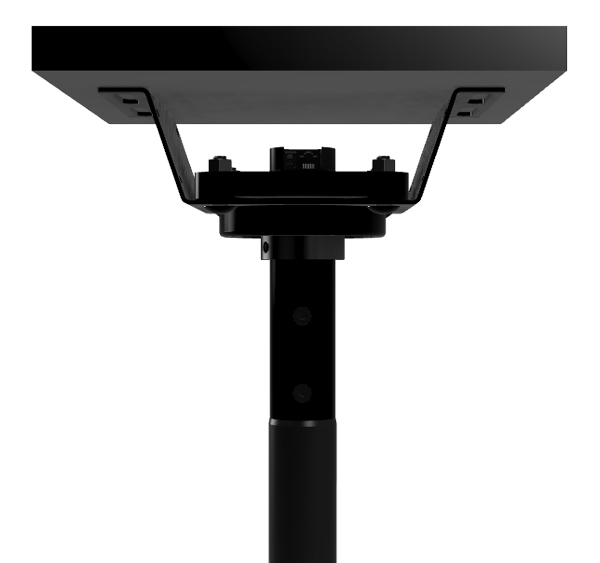
Inserting the pole into the top mount
Inserting the pole into the bottom mount

Step 4. Have the Second Mount Fixed, Then Check the Pole

  1. Your installer fixes the second mount on the marks from Step 3.
  2. Check that the pole remains straight and can rotate freely.
  3. Tighten set screws in top bearing collar to prevent pole from being lifted up.

Items 2 and 3 are yours, and they are the checks that tell you the install is right.

Check it is straight, and that it spins

Do both checks before you tighten anything else. They fail in different ways and they have different fixes.

Right Straight, and spins freely

The level reads plumb against the tube, and a light push keeps the pole turning smoothly. Go on and tighten the collar set screws.

Wrong Spins, but is not plumb

Both bearings are turning, but they are not one above the other. Undo the second mount and set it again from marks taken off the pole, as in Step 3, rather than from a measurement off a wall.

Wrong Stiff, rough, or binding

The mounts are pulling the pole out of line and loading the bearings. Loosen the second mount until the pole spins freely again, then re-mark and re-fix it. Do not leave a bearing under load.

The collar set screws are not mounting fasteners

This is the one thing on the whole install that gets mixed up. The screws that hold the mount to the building and the screws that hold the pole to the bearing are different fasteners, in different places, doing different jobs.

PERM-10Top bearing, collar, and set screw
The top of a pole in its bracket. Two slotted flanges reach out to the mounting surface, hex bolts hold the bearing housing to the bracket plate, and a collar with a set screw is clamped to the tube just below the bearing. 1 2 3 4 5
  1. Mounting fasteners Your installer's hardware, through the slotted flanges, into the ceiling or beam. These are the ones in the hole template, and the ones PoleFX does not specify.
  2. Bracket bolts Factory bolts holding the bearing housing to the bracket. They arrive tight. Leave them alone.
  3. Upper bearing The pole turns in this. Nothing you tighten should ever stop it turning.
  4. Bearing collar A ring clamped around the tube, just under the bearing. It turns with the pole.
  5. Collar set screws The ones Step 4 asks you to tighten. They clamp the collar to the tube, so the collar cannot pass up through the bearing and the pole cannot be lifted up. That is the only job they have, and they are not mounting fasteners.
Tightening the wrong screw is the documented failure here. A bracket bolt done up harder will not stop the pole lifting, and a set screw will not hold the mount to the ceiling. Source: assets/devices/permanent/topinsert3.png, assembly render.

Step 5. Plug in Power and Data at the Top

PERM-11Power and Ethernet at the top of the pole
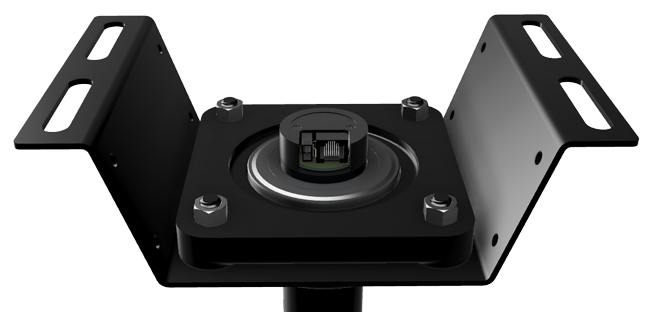
The top of the pole seen from above. Inside the bracket and the bearing, the pole's end cap has a window with two connectors on a small board: a DC power jack on the left and an Ethernet socket on the right. 1 2 3 4
  1. Power The left connector, a DC jack. It takes 5VDC, 60W from the pole's own supply. Nothing here comes from the Player.
  2. Ethernet The right connector, an RJ45 socket. This is the pole's data connection.
  3. End cap Both connectors sit in a window in the cap and face sideways, so the cables leave across the top of the pole rather than straight up into the ceiling.
  4. Bearing and bracket The connectors are inside the bracket. Anything you plug in has to clear the bracket flanges.
Connect both cables only once the pole is fully seated in both mounts. Source: assets/devices/permanent/ts_ports1.png, assembly render.
  1. With the pole fully seated in both mounts, connect the power and data cables at the top.
  2. Tie off the cables to minimize movement as the pole spins under them.
  3. Mount the pole’s power supply near the top mount, or extend the cabling as needed.
Right Tied off short

Both cables are anchored close to the top mount and the pole spins under them. Put the power supply near the top mount too, or run longer cable to it, so there is no loose loop to catch.

Wrong Left slack

Slack cable moves every time the pole turns. It wraps, then it pulls on the connectors, and a pulled power lead takes the pole dark mid-show.

Step 6. Connect to the PoleFX Player

The pole is a network device. The Player does not have an output socket per pole, and it does not power the pole.

Two supplies

The pole and the Player each have their own power supply, and neither feeds the other. If the Player's screen is dark, that is the Player's supply. If the pole never flashes purple, that is the pole's supply, up at the top mount.

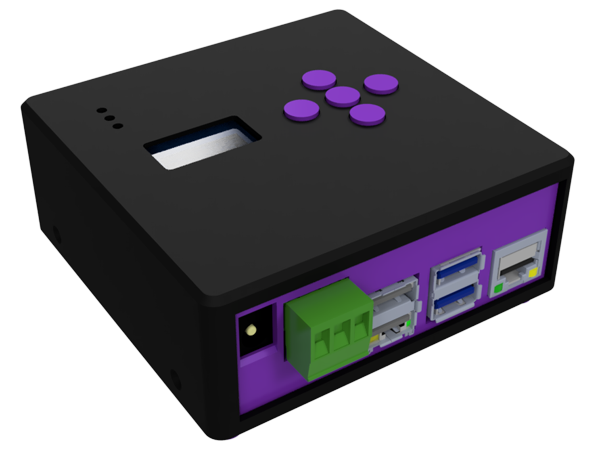
The PoleFX Player. Its connector face carries a power jack, a DMX terminal, USB ports, and one Ethernet socket.

  1. Use a network cable to connect the player to the pole.
  2. Plug power supply into player.
  3. Wait about a minute for the system to boot.

What the pole does while it starts

The pole lights up before the Player is ready, so the first two states below are normal. Wait for the third before you look for a fault.

1. Power on Short purple flash

A short purple section flashes at the top of the pole. This means the pole has power.

2. No data yet Static pattern

The pole shows a still pattern because nothing is sending it frames. Expect this until the Player finishes booting, about a minute.

3. Ready Full animated display

The Player has booted and is driving the pole. If the pole is still static after two minutes, check the network cable and the Player.

Taking the pole down

The mounts stay where they are. That is what the inch of clearance at the top is for. This is the install run backwards, and the order matters: releasing the collar before the cables are off leaves a loose pole still plugged in.

  1. Disconnect power, then data

    Unplug the pole's power supply at the top of the pole, then the network cable.

    You should see The pole go dark.

  2. Release the cable tie-offs

    Cut or undo whatever holds the two cables near the top mount, and move them clear of the bracket.

    You should see Nothing left attached to the pole.

    Careful Do this before you loosen the collar. A pole free to lift while a cable is still tied to the bracket pulls on the connector.

  3. Loosen the top bearing collar

    Back off the collar set screws, the same ones you tightened in Step 4. Leave the bracket bolts and the mounting fasteners alone.

    You should see The pole free to slide upward in the bearing.

  4. Lift and swing the bottom out

    With a partner taking the weight, lift the pole into the gap at the top, then swing the bottom clear of the floor bearing.

    You should see The stub on the bottom of the pole come out of the lower bearing.

    Careful Two people. The pole can be close to 12 feet long and it is loose in both bearings at this point.

  5. Lower it and carry it out

    Bring the top down out of the upper bearing and take the pole away. Both mounts stay on the building.

    You should see Two mounts still fixed, ready for the pole to go back in the same place.

To put it back, run the same list in reverse, ending with the collar set screws and then the cables.

The pole lights up but never animates

This is the most common thing to go wrong after an install, and it is nearly always one of five things. Work down the list: each branch ends in something you can check without tools.

Start here The pole is lit, but the pattern never moves.
  1. If It has been less than about two minutes
    Do Wait. A still pattern is what the pole shows while nothing is sending it frames, and the Player takes about a minute to boot.
  2. If The Player's screen is dark
    Do The Player has no power. Check its supply, which is separate from the pole's.
  3. If The Player is up and showing Now Playing
    Do Check the network cable at both ends. Look for a link light at the Player's Ethernet socket.
  4. If The cable is good
    Do Check that this pole's output is switched on, in Settings > Outputs. An inactive output means the Player sends it nothing at all.
  5. If The output is active and it still does not move
    Do Pick a different pattern on the Patterns page. If the pole changes, it was playing a still pattern all along.
  6. If It animates but looks wrong
    Do That is a different fault. See the pole symptom list.